Ed Husic’s Position Is Evidence of Why We Must Build Power Outside of Labor

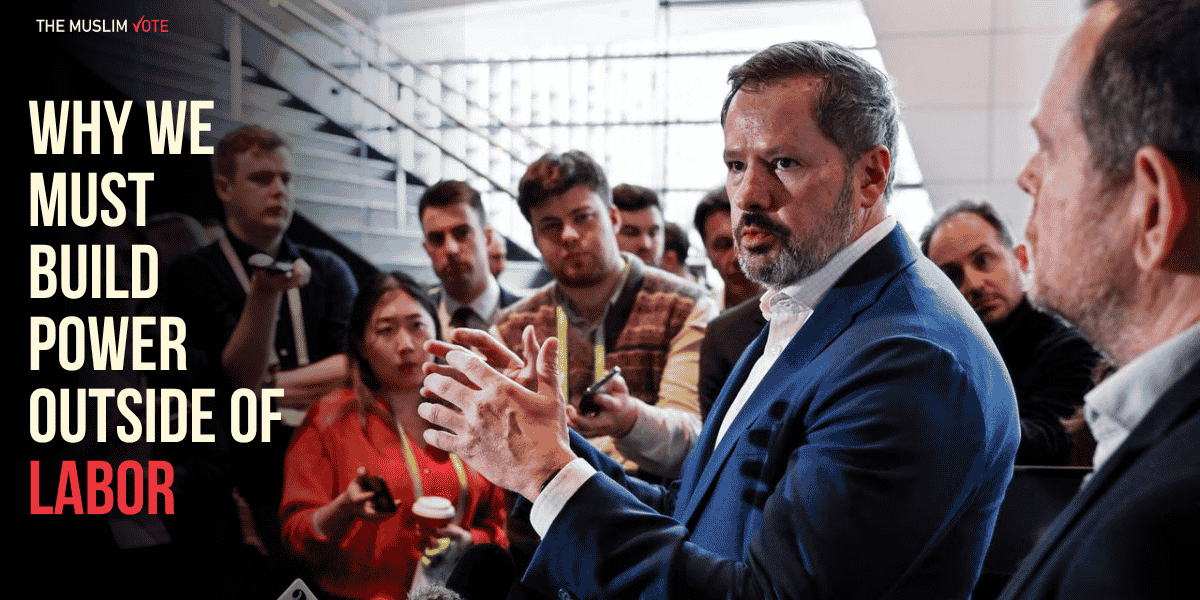
Ed Husic’s position at Labor's National Conference should not be used to reassure Muslims and advocates for justice that Labor is still worth waiting for. It should show them why waiting inside Labor has failed.
Husic did what Muslim Labor loyalists have spent years telling the community to do. He stayed inside the party; he worked through its structures; he drafted a resolution; he sought support from delegates, and he tried to place Gaza before the conference for an open debate.
Labor did not answer him with a better argument. Its machinery prevented the argument from reaching the floor. The resolution was denied the seconder it required, while the leadership celebrated a conference supposedly defined by unity. Husic himself accused the party of suppressing dissent and said extraordinary energy had been used to stop the motion being heard.
This is how Australia’s major parties increasingly operate: tightly controlled institutions that permit only enough disagreement to preserve the appearance of internal democracy. Debate is tolerated until it threatens the leadership’s authority or requires a change in policy. Fatima Payman was condemned after refusing to remain bound by Labor’s position on Palestine, following years of mass killing in Gaza. Husic remained inside, followed the rules and attempted to initiate a debate. One was punished for crossing the floor; the other was prevented from reaching it. The methods differed, but the message was the same: dissent is permitted only while it remains politically harmless.
That is the moral lesson for the Muslim community.
For years, the community has been told that influence comes through loyalty, access and patient internal advocacy. Yet when one of Labor’s most prominent Muslim figures attempted to force a debate on what he called "one of the defining moral issues of the time", even he could not secure the right to have the matter openly tested.
Husic's treatment exposes the limits of the strategy.
Husic’s intervention showed that any form of dissent from a senior Muslim figure inside Labor can be contained without forcing the party to change course. The question is no longer whether good people remain inside Labor. The question is whether their presence gives the community power over Labor, or merely gives Labor credible Muslim figures who absorb community anger while the leadership retains control.
That is an important difference.
Political loyalty is ultimately measured against outcomes, accountability and respect. When a party suppresses debate on mass Palestinian suffering, then asks Muslims to remain loyal because sympathetic voices still exist inside it, representation begins to function as a substitute for power.