No one needed Anthony Albanese to "discover" that all innocent life matters

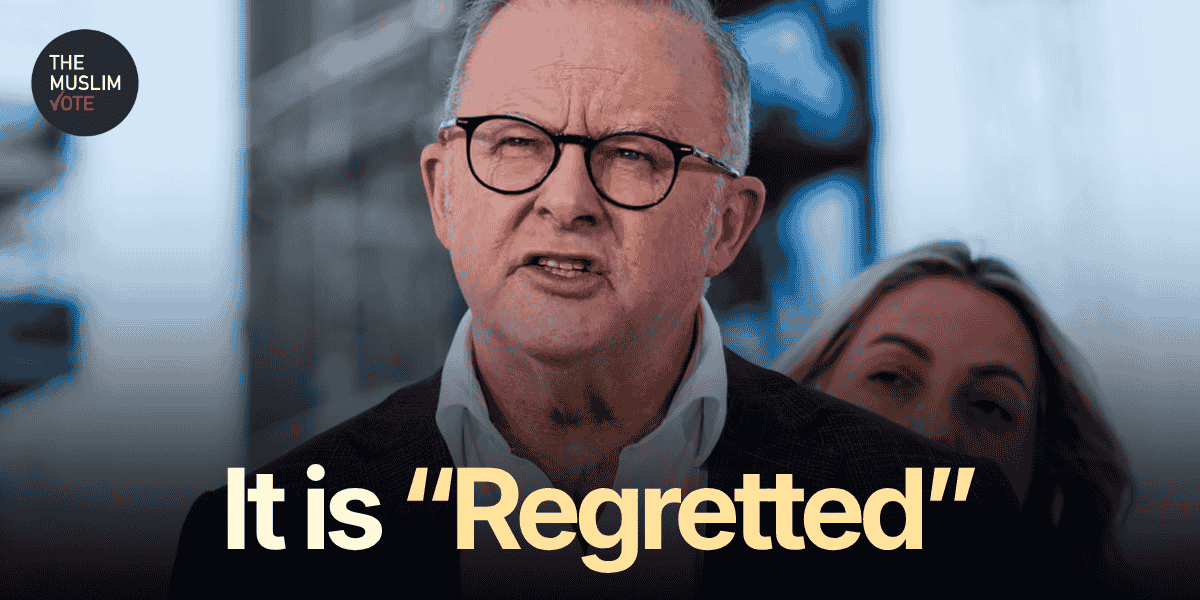
Anthony Albanese was asked a direct question at a press conference on 13 April: "What is your message to tens of thousands of Australians of Lebanese background who are grieving this war, including many who have lost family members and homes?" His answer was this: “The loss of any innocent life is to be regretted, wherever it occurs, whatever the circumstances are.” There was no condemnation, no naming of Israel as the aggressor, no direct and firm talk, no mention that "Lebanon has a right to defend itself," simply nothing but vague, universal terms about humanitarian suffering.
This is what weakness sounds like in office. Lebanese Australians were not asking the Prime Minister whether death is regrettable in some broad and bloodless philosophical sense. They were asking whether he would speak plainly about what is being done to Lebanon and to their families. Instead, he gave them distance, abstraction, and the stale language of managed sorrow.
This is why so many in the community feel abandoned. Reporting on Lebanese Australian reactions has captured anger, fear, and devastation as families watched homes destroyed and relatives killed or trapped. The frustration is not only with what the government has failed to do. It is with how quickly the government retreats into generalities and vagueness when the moment demands simple truth.
No one needed Albanese to discover that all innocent life matters. That is the easiest sentence in the world to say. The question was whether he could say something fitting to the situation: who is inflicting this suffering, what is Australia prepared to call it, and why are those killed so often folded into neutral language that empties violence of its author.
A Prime Minister who cannot answer a direct question about Lebanese civilians without dissolving their deaths into soft universalism and then pivoting to economics is politically frail. He was asked to be decisive and could not bring himself to say what the world clearly sees.
He stood in a place of honour when it was Eid time for Muslims, but when asked weeks later about Lebanese civilians being killed, he could only offer a detached sentence, as though he were not speaking about human lives. The real lesson is that he and other politicians will gladly stand among us when it costs them nothing, then leave us exposed when plain truth demands courage.
This is why our community cannot live on access and invitations. Without organised pressure, politicians will not take us seriously. Without accountability, they will keep using our communities when convenient and abandoning them when it matters.