The government review on listing Hizb ut-Tahrir
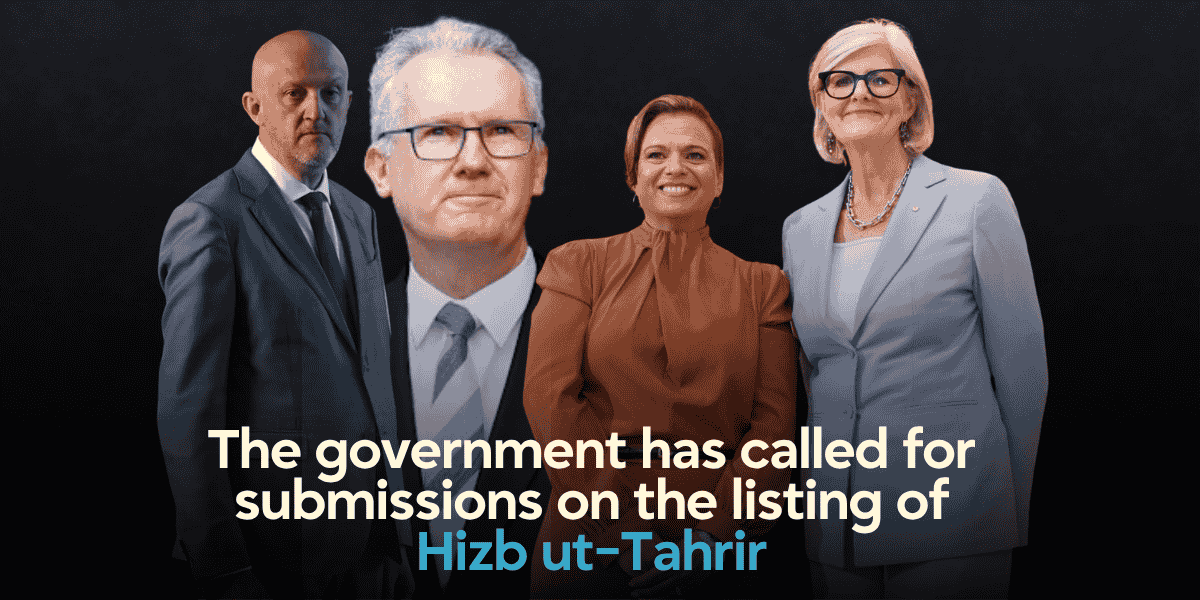
The government has called for submissions on the listing of Hizb ut-Tahrir, with responses due by 17 April, and we have made ours because this issue demands principled resistance. This is not a question of whether one agrees with Hizb ut-Tahrir. It is a question of whether the government should be permitted to prohibit an organisation under a lowered threshold, with serious criminal consequences and a precedent that extends well beyond a single case. That shift has consequences, exposing members, supporters, and associated activity to serious criminal penalties. It also establishes a precedent that can later be turned outward, which is why the listing must be challenged now, at the point of first use, before a broadened power becomes routine.
The issue is the threshold
In practical terms, the government has moved the line between conduct it condemns and conduct it criminalises. That line matters because once it is redrawn at a lower threshold, every organisation operating under political scrutiny has reason to study what just happened.
The cost will not stay with one group
The cost of this will not remain inside a regulation or a committee report. It will fall on real communities. It will alter how organisations speak, assemble, publish, fundraise, and associate. It will teach people that lawful political or religious activity can become dangerous once the government decides an organisation’s rhetoric has crossed a broad and politically charged standard. That changes behaviour and narrows civic space. It increases fear around who can be spoken to, what can be said, and what forms of association will later be reinterpreted through a security lens.
Why this submission matters
That is why it is important to push back now. A submission to the Parliamentary Joint Committee on Intelligence and Security creates a record that this decision was challenged on threshold, on consequence, and on principle. It forces the broader implications into view. It says this power should not pass quietly into accepted practice. The Muslim Vote raises this issue because prohibition powers do not become dangerous only when they are expanded later. They become dangerous the moment the first use is allowed to stand without resistance. This listing must be rejected because a lowered threshold, once normalised, never remains confined to its first target.
Co-signatories
The Muslim Vote is accepting organisations and individuals to sign the submission as co-signatories. This would require that each organisation or individual see the document. If you are interested, please contact us using the details below.
Contact:
Email: info@theMuslimVote.com.au | Phone 0477 333 155