Relationship Maintenance Has Replaced Political Strategy

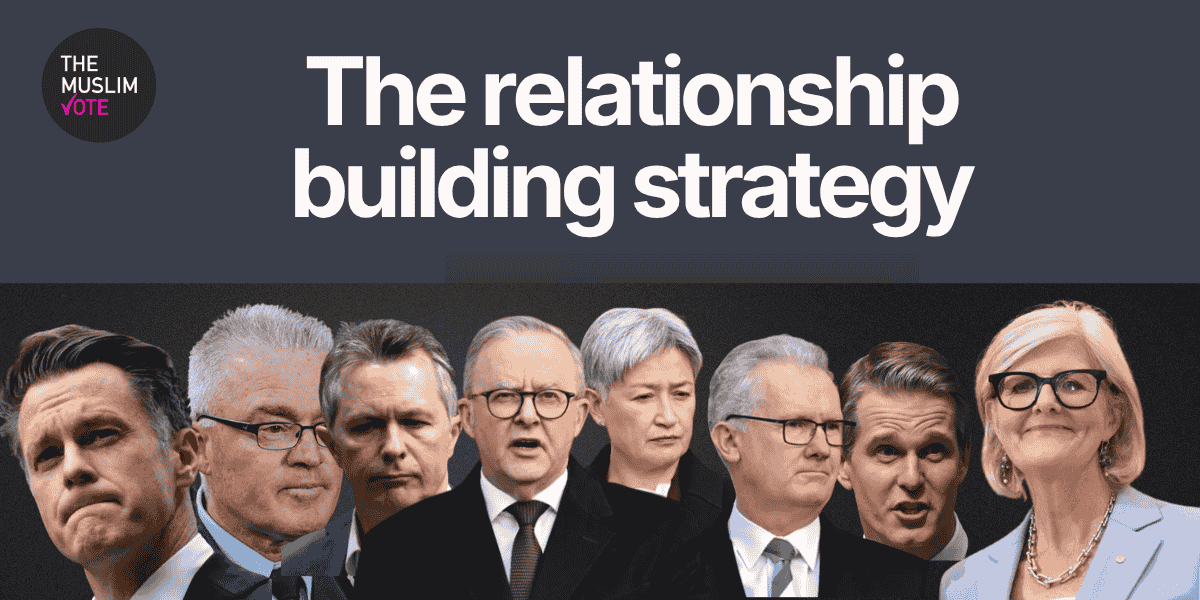
Ramadan exposed what has now become impossible to defend. The same Labor figures who welcomed Isaac Herzog into Sydney presided over an increasingly aggressive political, legal and social climate for Muslims and continued moving through Muslim spaces and relationships. The operating logic remained the same: preserve the relationship and treat its continuation as a virtue in itself.
On 9 February, during the protest against Herzog’s visit, Muslim worshippers were physically dragged while praying; the police commissioner offered a non-apology, saying sorry only "for any offence taken”, and Chris Minns openly declared that "Police did everything we asked them to do." By 20 March, Anthony Albanese and Tony Burke appeared at Lakemba Mosque. The sequence matters because it reveals the governing logic: assault, qualified regret, no accountability, then resumed access.
When Contact Continues Despite Political Failure
Whether it was the Governor-General’s iftar, Chris Minns at a Turkish community iftar, Tony Burke and Jason Clare hosting Muslim leaders for iftar, or Albanese, Burke and Jason Clare appearing at Eid prayers in Lakemba and Auburn, the point is larger than any single visit or photograph. The issue is that relationship-building was preserved even after the government had already shown the community exactly how little moral or political restraint those relationships were producing.
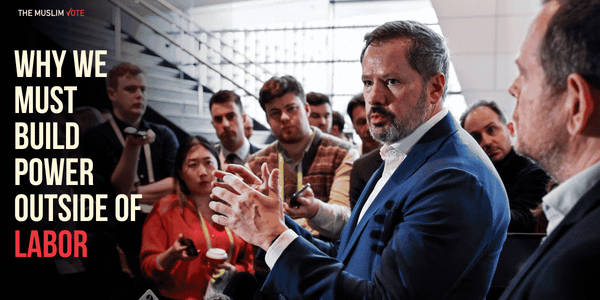
That is why the argument has to move away from etiquette and toward political structure. A community does not become influential because ministers keep turning up, because channels remain open, or because leaders can still point to private conversations. Influence exists where power fears a consequence for ignoring you. Ramadan showed the opposite. Relationships were kept warm even after the state had shown it could humiliate Muslim worshippers in public, refuse a proper apology, and still expect the architecture of engagement to remain intact. Once that happens repeatedly, engagement stops operating as accountability and starts operating as insulation. It gives the government the appearance of connection while stripping the community of leverage. That is why private access under these conditions is so politically useful to Labor. It allows ministers to say they are listening while learning that listening carries no price.
Relationship-building as a strategy
No serious community strategy emerged to interrupt that pattern. No major Muslim organisation or body proposed even a disciplined one-month temporary disengagement. No collective pause was used to formulate terms for re-engagement, set boundaries, or produce a document that made future access conditional on conduct. Statements were issued. The behaviour remained. That absence is politically decisive because institutions adapt to what they learn they can survive. A government that sees the Muslim community recover quickly into the familiar language of meetings, dialogue, and relationship management after public assault and non-apology draws a hard conclusion: there is no boundary it cannot test. Power always studies recovery. It watches how much a community will absorb before it converts pain back into protocol.
Self-imposed political irrelevance
That is the real meaning of self-imposed political irrelevance. It is the condition in which a community keeps returning to a party that has already learned it can injure that community without paying a meaningful price. It is what happens when fear of the alternative becomes so dominant that loyalty is maintained regardless of conduct. At that point, political judgment is replaced by political hostage logic: stay where you are, accept degradation as prudence, and call dependency realism. The result is obvious. Labor no longer has to earn Muslim confidence. It only has to remain slightly less frightening than the opposition. A community trapped in that frame stops functioning as a political force and starts functioning as captive electoral capital. That is why the strategy of working “from within” has failed. It has delivered closeness without leverage, conversation without restraint, and symbolism without protection.
What are the options?
The pathway forward is therefore much clearer than many want to admit. One option is to continue governing ourselves by fear, stay wedded to Labor no matter what, and slide deeper into irrelevance while telling ourselves that access still means something. The other is to create consequences. That begins with temporary disengagement where required, the suspension of ordinary relationship maintenance after serious breaches, and a written framework for re-engagement that sets out conditions, expectations, and political boundaries. It continues by taking alternatives seriously, including independents, because parties only change when they realise support is no longer automatic. None of this requires romanticism about alternatives. It requires seriousness about power. A party that knows it gets a free ride has no reason to correct itself.
That is the lesson Ramadan should have forced into the open. Relationship building has become a substitute for strategy, and that substitution is costing the community dearly. The question is no longer whether engagement should exist. The question is whether engagement will keep operating as a mechanism through which Muslim anger is softened, redirected, and returned to government as civility. A community that wants dignity, restraint from power, and real political regard has to make one thing unmistakable: access is conditional, legitimacy is earned, and no party gets to degrade Muslims in public life while still treating Muslim relationships as part of its normal political inheritance.
The Muslim Vote proved consequences are possible
The strongest answer to the politics of managed engagement was demonstrated at the last federal election (2025). The Muslim Vote (TMV) did not wait for permission to become respectable to the political class. It backed independents, pushed voters to think beyond inherited party loyalty, and helped show that Muslim political energy could be organised into electoral consequence. In Western Sydney, that consequence was visible even inside a broader Labor landslide. Labor held Watson and Blaxland, but the margins were cut back, and the independent candidates finished ahead of the Liberals on the two-candidate count.
Professor Andy Marks said this was “the kind of surge you would expect to see over four or five election cycles”, which is precisely why the result mattered so much. It showed that disciplined external pressure can do in one cycle what soft access politics fails to do over decades.
That is the distinction many still refuse to confront. The Muslim Vote has never argued against engaging with politicians or institutions when such engagement produces a clear benefit for the community. The issue is that relationships without external pressure do not produce serious influence. They calm the fears of politicians who should be feeling pressure. They reassure power that the community can be managed through access and grants, while law, policing, and foreign policy remain untouched. That is why the last election matters more than a protest vote. It was a structural warning. It showed that Muslims are not condemned to political hostage status unless they choose it.
Once a community demonstrates that support is conditional, that safe seats can be shaken, and that loyalty can no longer be inherited for free, the entire logic of engagement changes. From that point on, relationship building stops being a ritual of surrender and starts being measured against something real: consequence.