April-May Overview


These last few weeks and months have been significant across legal, political and community fronts. Below is a breakdown of the key developments and our full analyses. More to come soon.
The Farrer by-election
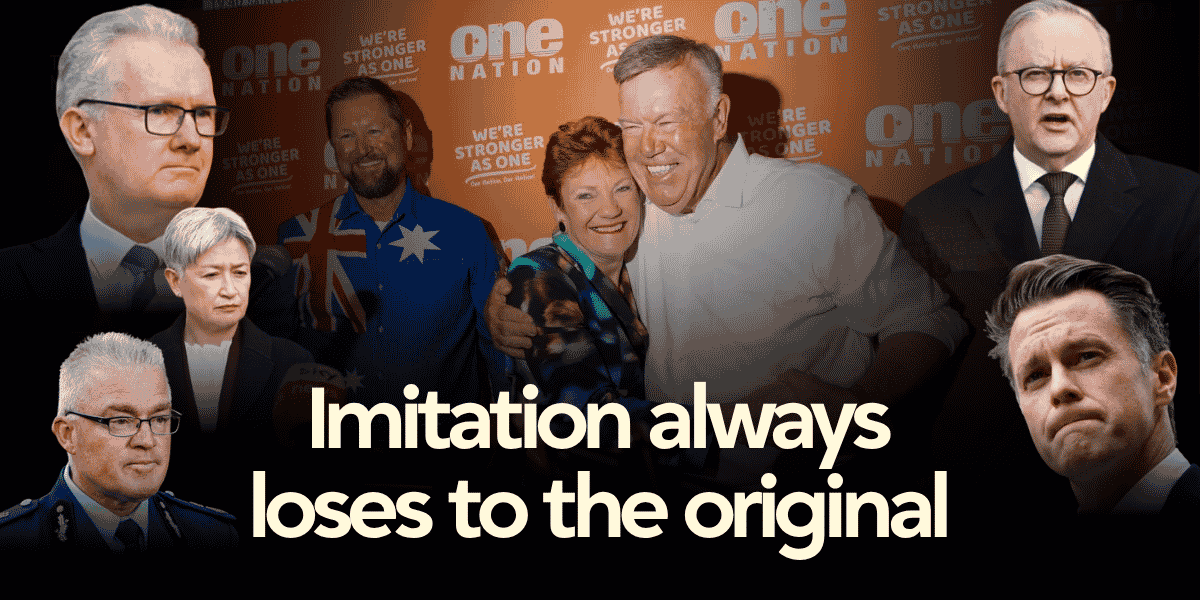
Labor opened the door to One Nation: “Imitation always loses to the original”
Labor’s failure is not that it cannot stop the rise of One Nation. Its failure is that it has spent years validating the political terrain on which One Nation thrives. By borrowing the language of fear, posturing on borders and security, expanding punitive laws and treating Muslim and migrant communities as politically expendable, Labor has helped normalise the very politics it now claims to oppose. The major parties continue trying to outflank the far right by sounding tougher on immigration, protest and national identity, but the imitation always loses to the original. Once politics becomes a competition over who can sound most hostile, multicultural and minority communities become the first casualties.
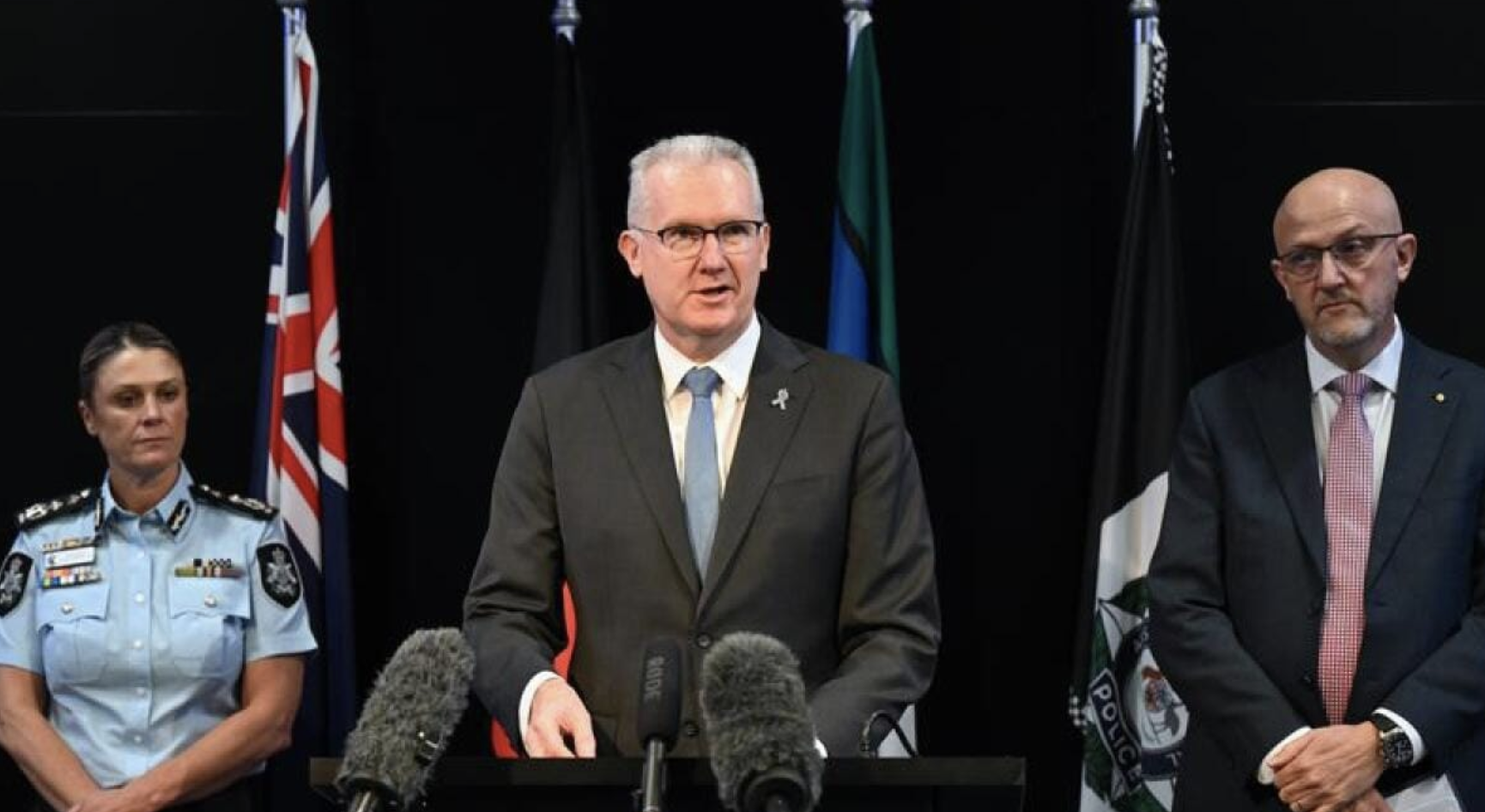
Tough Talk for Returning Families, Silence for Israel’s Crimes
The article argues that the Australian government and security establishment apply forceful language, policing and counter-extremism frameworks when the subject is Muslims or ISIS-linked families, but become silent, procedural and passive when allegations concern Israel or Australians who served in the IDF during the destruction of Gaza. It contrasts Tony Burke and the AFP’s public warnings, investigation language and deradicalisation posture toward returning Australian women and children from Syria with the absence of equivalent urgency toward Australians linked to Israeli military operations. The article concludes that the issue is not a lack of legal power, but the selective direction of that power.
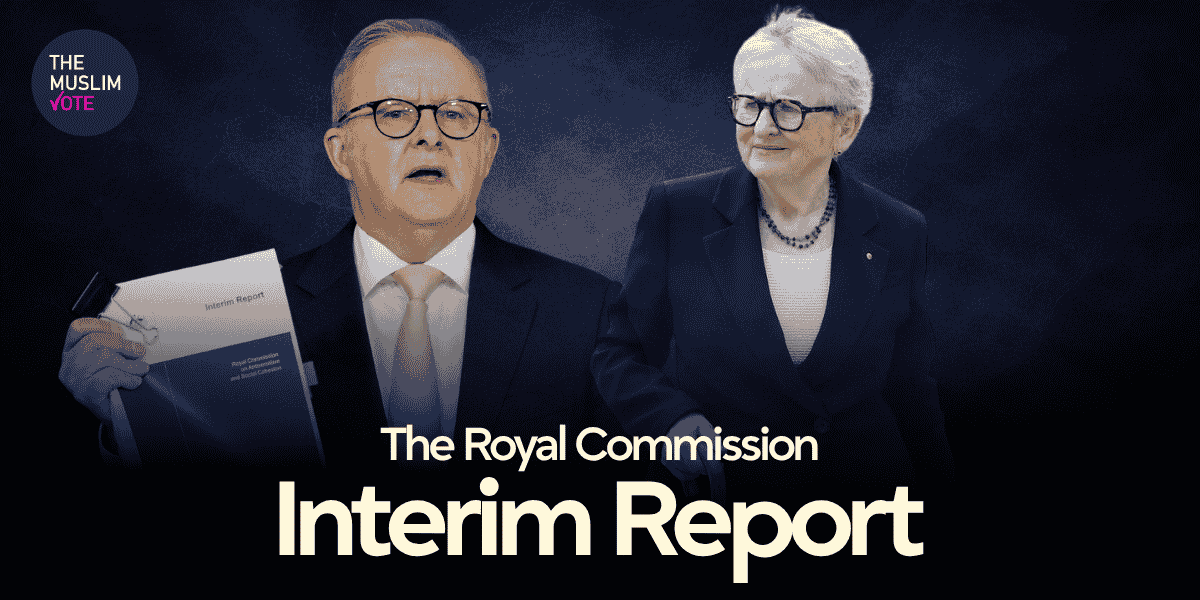
The Interim Report by the Royal Commission Pulls Palestine Protest Into a Security Frame
The article argues that the Royal Commission’s interim report places Palestine protest, anti-genocide mobilisation and Muslim political expression inside a broader security and counter-terrorism narrative. It claims the report repeatedly links pro-Palestine protest activity to antisemitism, radicalisation and violent protest language, while failing to meaningfully address the genocide in Gaza as the cause of public mobilisation. According to the article, the report reproduces Muslim-coded counter-terror assumptions by embedding current concerns around Gaza and protest into long-standing security frameworks shaped by post-9/11 “Islamist terrorism” discourse. The article further argues that the report narrows social cohesion into a machinery-of-state security project centred on intelligence integration, policing and protective security.
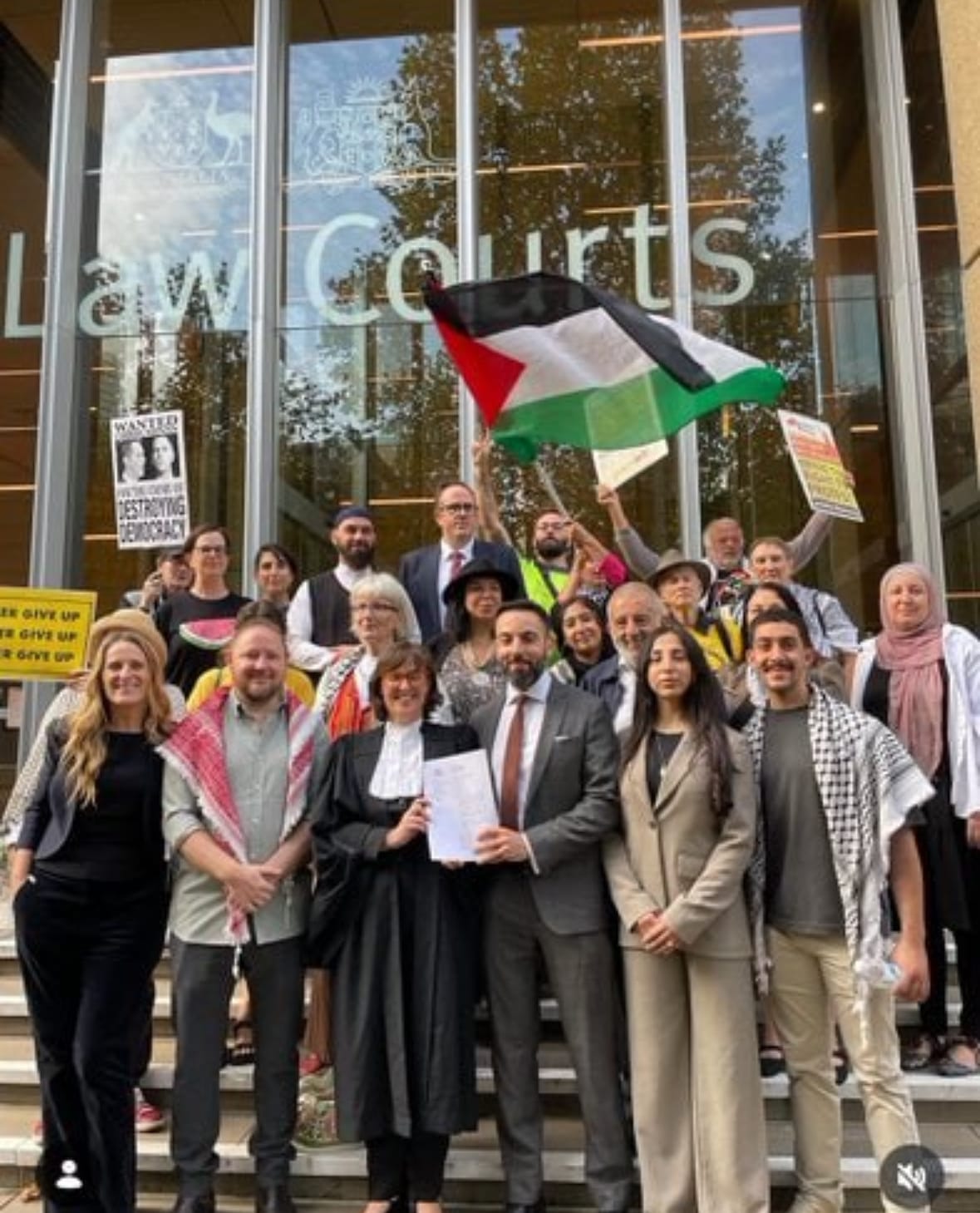
The Supreme Court struck down Chris Minns. It comes at NSW’s expense.
The government review of listing Hizb ut-Tahrir
The article argues that the government’s proposed listing of Hizb ut-Tahrir should be resisted not because agreement with the organisation is required, but because the listing lowers the threshold for prohibition powers with serious criminal and political consequences. It contends that the government has effectively redrawn the line between speech or conduct it condemns and speech or conduct it criminalises, establishing a precedent that could later expand well beyond a single organisation. The concern is framed as one of principle, threshold and future state power rather than organisational endorsement.

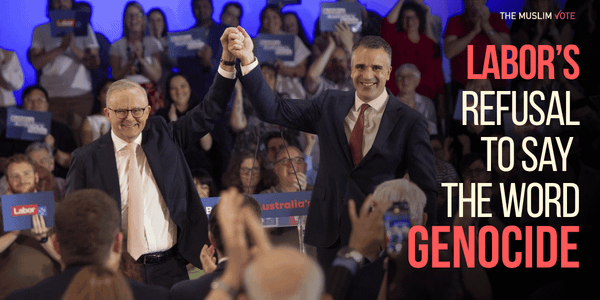
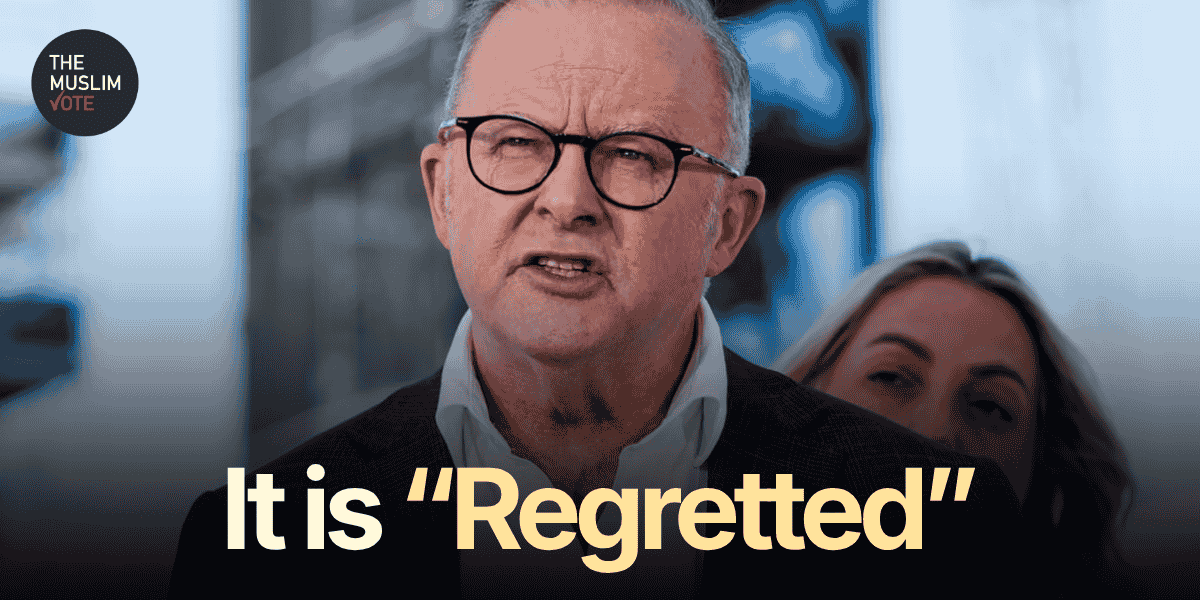
No one needed Anthony Albanese to "discover" that all innocent life matters
The article criticises Anthony Albanese for responding to questions about Lebanese civilians killed during the war with vague humanitarian language rather than direct political clarity. It argues that Albanese reduced a concrete question about Lebanon, civilian suffering and Australian Lebanese grief into abstract statements about “all innocent life,” avoiding any direct naming of Israel, aggression or accountability. According to the article, this style of political communication reflects weakness, distance and an unwillingness to confront uncomfortable truths when political courage is required.
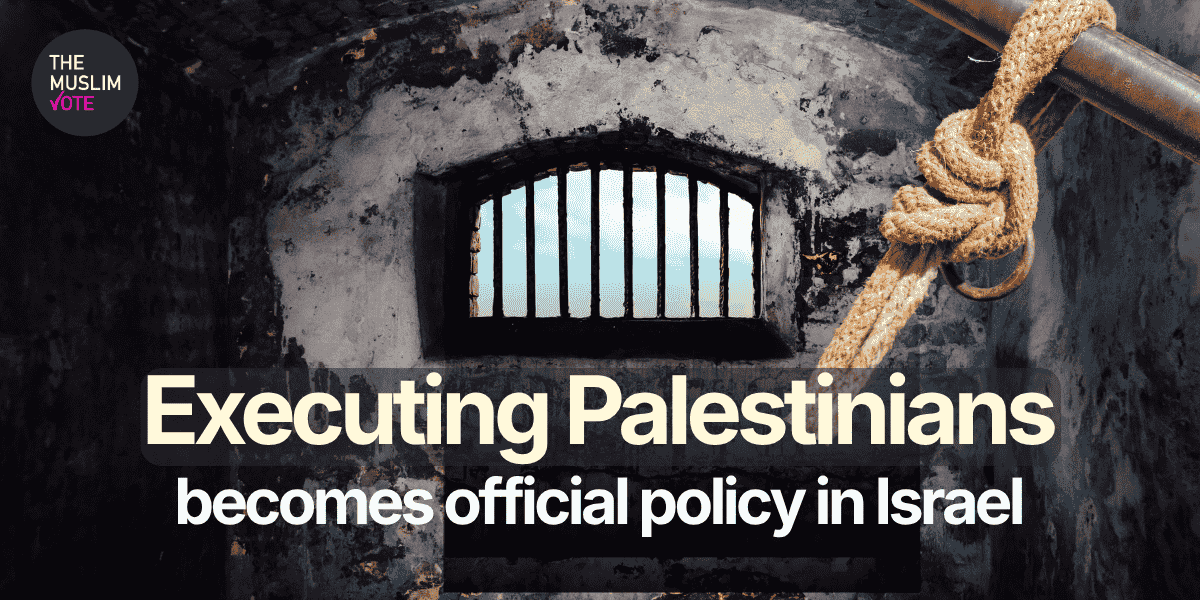
Israel finds another way to kill Palestinians: Labor preserves the structure.
The article argues that Israel’s new law making hanging the default sentence for Palestinians convicted in military courts formalises execution within an already existing apartheid and domination system. It presents the law not as an isolated punishment measure, but as another mechanism through which Palestinian life is controlled and destroyed, particularly within a prison system holding thousands of Palestinians, including women and children. The piece frames the legislation as an extension of broader structures of violence, arguing that Israel has moved from mass destruction and military killing into legally codified execution.