Tough Talk for Returning Families, Silence for Israel’s Crimes
Silence for Israel’s Crimes

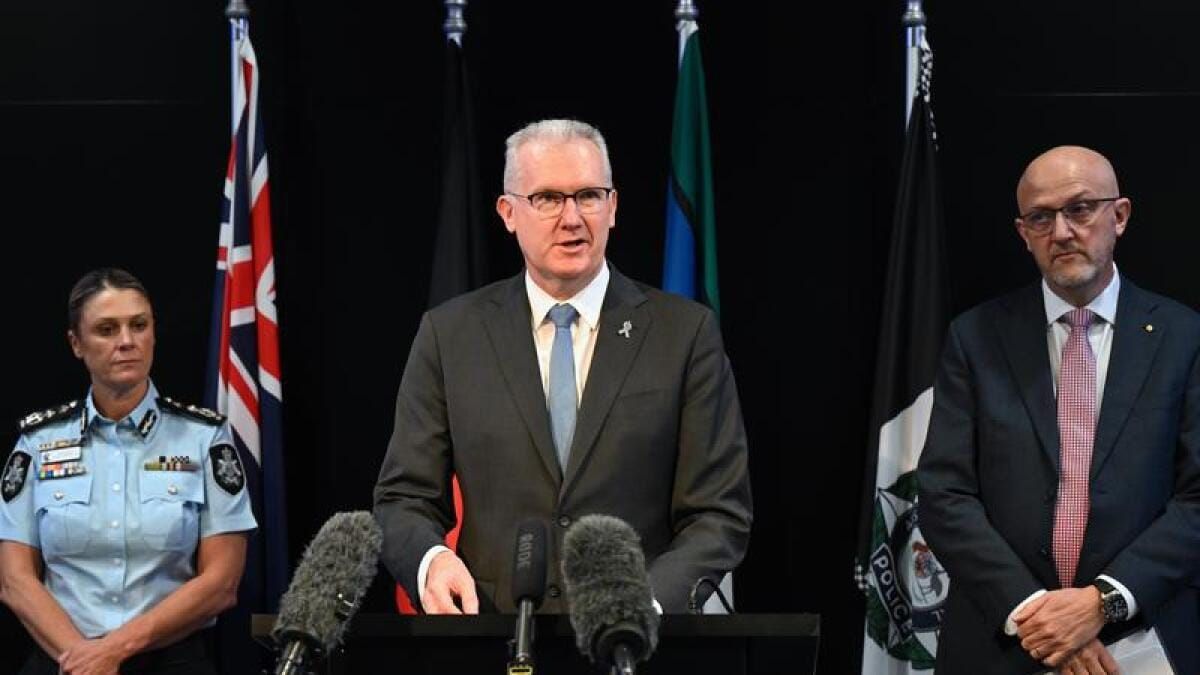
When Australian women and children return from Syria with ISIS-linked histories, Tony Burke and the security establishment suddenly discover serious posture and language. The AFP appears, ASIO is invoked, exclusion orders are raised, prosecution is promised, and children are spoken about through deradicalisation before the public has even been given a proper account of their individual circumstances. Yet when Australians serve in Israel’s military, during mass civilian killing, the performance collapses into paperwork. No urgent lectern, no stern warning, no demand to identify military units, no instruction to preserve evidence, and no promise that Australian law will pursue anyone linked to atrocities.
They seem to think the community cannot tell the difference between principle and theatre. They expect Muslims to accept thunder when the subject is Muslim, whispers when the victim is Palestinian, and ceremony when votes are needed. Burke can sound severe beside uniforms, then return to a heavily Muslim electorate, smile through citizenship ceremonies, and pretend the contradiction is invisible. Every selective display of strength makes the performance smaller.
A government that finds its voice selectively
Tony Burke and AFP Commissioner Krissy Barrett stood before the cameras yesterday and spoke with force about the return of four Australian women and nine children linked to Islamic State from Syria. Burke said the government had not assisted their return and warned that adults suspected of crimes would face the law. Barrett confirmed the AFP was preparing for arrests and ongoing investigations. The children, according to reporting, are expected to enter reintegration, psychological, and counter-extremism programs.
The contrast is impossible to ignore. The government and Tony Burke know how to say “full force of the law.” It knows how to speak about risk, monitoring, prosecution and deradicalisation. It knows how to reassure the public that the state is alert and ready. Yet that same political class has not gathered with the same force to condemn Australians who travelled to serve in the Israeli military to participate in the genocide in Gaza.
It has shown no appetite to pursue Australians who wore Israel’s uniform. No urgent briefings, no public warnings, and no language of prosecution. The law suddenly becomes quiet when the uniform is Israeli, and the victims are Palestinian.
Where is that urgency for Palestine?
There has been no comparable federal theatre for Australians who served in the IDF. No equivalent press conference demanding answers about what they did, where they served, what units they joined, what operations they participated in, and whether Australian law has anything to say about their conduct. There has been no comparable demand for justice for Palestinians with family members killed, starved, displaced or buried under rubble. There has been no “full force of the law” language for those who enabled, defended or normalised the destruction of Gaza.
The research: attitude and behaviour change
Anger and outrage are not the only outcomes that occur when the Government acts selectively. Evidence shows that "perceptions" of injustice shift attitude and change behaviour, having lasting consequences for the nation. When communities see one category of harm met with press conferences, warnings, investigations and deradicalisation language, while another category is met with caution, procedure and silence, their attitude toward the government changes. Australian research (Charkawi et al., 2024) shows that domestic perceptions of injustice and foreign policy impact trust, cooperation, a willingness to engage with government, and the credibility of organisations that work with government (the "sell-out" construct). The point is clear: people may still support safety work, but they become far more critical of whether government-backed engagement is honest, credible or compromised.
That is where the “sell-out” perception and construct become politically serious. It is a measurable attitude that forms when engagement with government is viewed through selective enforcement, foreign-policy injustice and mistrust. If the AFP can speak with force about ISIS-linked families but refuse the same seriousness toward Israel, IDF-linked Australians or genocide participation, then community engagement begins to look like collaboration with a system that has already chosen its limits. The damage is practical: trusted voices lose credibility, community organisations become suspect, and engagement is eroded. Governments then complain about mistrust while feeding the very conditions that produce it.
TMV formally requested the AFP to investigate Herzog
It would be too kind to call what Burke, Barrett, and Burgess did yesterday a double standard. On two separate occasions, The Muslim Vote wrote to the AFP Commissioner before Isaac Herzog's arrival, asking that the AFP investigate, or at the very least preserve and collate evidence relevant to incitement to genocide. The request was not reckless. It concerned a foreign head of state whose public statements and role had already been raised in serious international legal and human rights contexts. It asked the AFP to do what law enforcement agencies are supposed to do: examine evidence, preserve material, and determine whether Australian law had been engaged. The AFP responses showed that it is unwilling to act on issues that are specifically within its remit.
When the subject is Israel and the crimes pertain to genocide, the same legal system retreats into process with no public warning and no visible evidence-gathering posture. Not a single statement that the full force of Australian law will be applied without fear or favour. The problem is not that the state lacks power. The problem is that it delivers power in one direction.
This is why communities lose trust. They are not imagining the actions of government and law enforcement. They are watching it operate in real time.