The San Diego Terrorist Attack

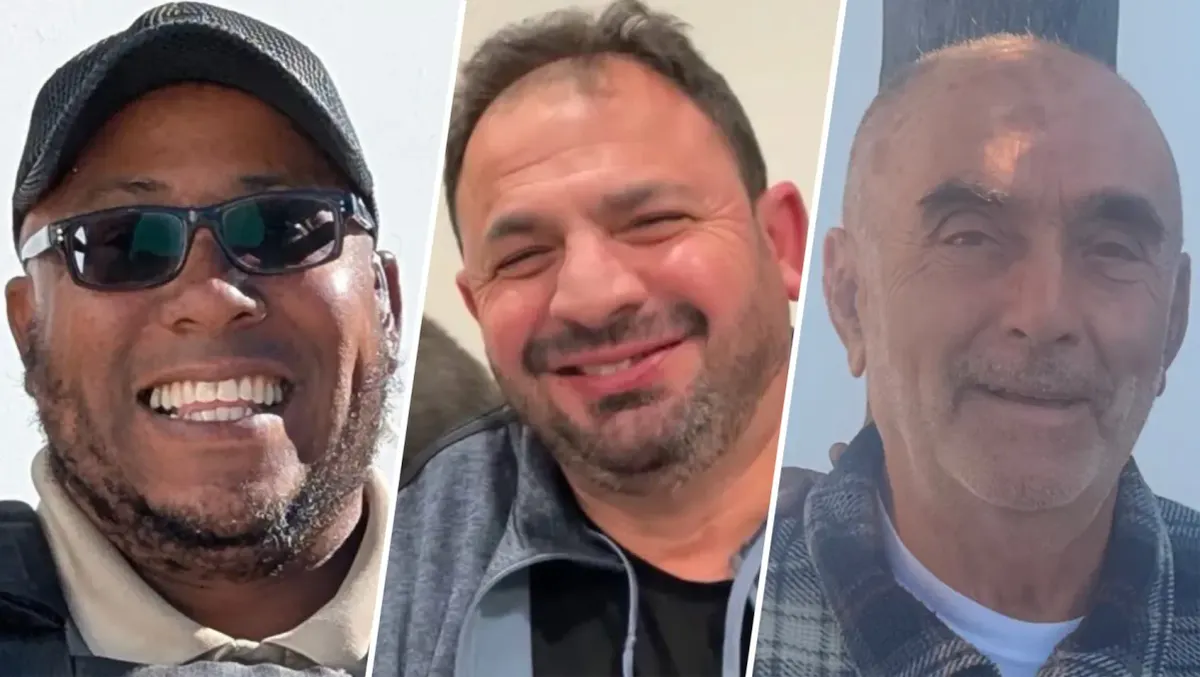
Three Muslim men, Amin Abdullah, Mansour Kaziha and Nadir Awad were killed at the Islamic Center of San Diego after two teenagers opened fire while around 140 children were inside the mosque. Abdullah, the security guard, confronted the gunmen, exchanged fire and helped trigger the lockdown that kept those children out of reach. Kaziha, a mosque elder, and Awad, a neighbour who ran toward danger, were also killed while helping delay the attackers and draw danger away from the building. Their names deserve more than passing mention. They stood between worshippers, children and massacre.
The killers did not emerge from nowhere. They were not simply two disturbed teenagers who randomly selected a mosque. The attackers were Caleb Vazquez and Cain Clark, and their manifesto named the Christchurch terrorist as a direct inspiration and referred to themselves as his “sons”. That detail matters because anti-Muslim violence is rarely born in isolation. It grows inside a public culture where Muslims are described as threats, invaders, extremists, demographic dangers and enemies of civilisation. Political language does not need to pull a trigger to prepare the ground on which violence becomes imaginable. A massacre does not begin only when the gunman enters the mosque. It begins earlier, when a community is turned into a symbol of danger.
The Christchurch killer did not invent a worldview out of nothing. He drew from a transnational ecosystem of racist and anti-Muslim ideas. San Diego shows that ecosystem is still alive, still circulating, and still producing consequences.
Political discourse matters because it does not remain confined to speeches, headlines, or parliamentary exchanges. It alters the conditions under which communities live, worship, organise, and seek safety. The consequences are practical and cumulative: mosques divert resources into security, children inside Islamic centres prepare for lockdowns, and worshippers enter prayer under the shadow of another possible Christchurch.
Anti-Muslim hatred now moves across borders through manifestos, online networks, replacement rhetoric and the repeated portrayal of Muslims as a civilisational threat. Australia is not separate from that ecosystem. It produced the Christchurch terrorist, and its own political class has spent decades giving institutional language to suspicion about Islam, Muslims, mosques and Muslim women.
Josh Frydenberg (former Treasurer of the Liberal Party) said, “There is a problem within Islam”
Cory Bernardi (former Liberal senator) said, “If you want to identify where the radical threats are in your society, look for the individual wearing the burqa.”
John Howard (former Prime Minister of Australia) said Muslims coming to Australia needed to “learn English quickly” and “treat women better” in order to fit in with Australian values.
Pauline Hanson (One Nation leader) said Australia was in danger of being “swamped by Muslims.”
Andrew Bragg (Liberal senator for New South Wales) said that Muslims should “take some responsibility” after the Bondi attack.
Israeli Defence Minister Yoav Gallant said about civilians, “We are fighting human animals, and we are acting accordingly.”
The silence of Albanese and Burke
TMV could not find a single official statement from Anthony Albanese, Tony Burke or Penny Wong on the San Diego mosque attack. There was no national grief, warning about anti-Muslim hatred, or public recognition that a Christchurch-inspired attack had again spilled Muslim blood. Australia is not a spectator to this story. The Christchurch terrorist was Australian, and his manifesto continues to inspire attacks. His ideology has travelled across borders. A mosque in San Diego is now mourning because the same anti-Muslim ecosystem that produced Christchurch has not been dismantled.
Anthony Albanese and Tony Burke know how to find the words, cameras and urgency when the victims are not Muslim. Australian ministers routinely speak about overseas violence when they decide the issue is politically urgent. Australia has joined formal statements condemning terrorist attacks overseas, including the 26/11 Mumbai and Pathankot attacks, and has spoken forcefully on Ukraine and Iran as matters of international security, human rights and public concern. The silence after San Diego therefore cannot be explained by distance. Three Muslims were killed in a Christchurch-inspired attack on a mosque, yet there was no comparable statement from Albanese or Burke naming anti-Muslim hatred, recognising the victims, or acknowledging that the ideology of an Australian terrorist continues to travel across borders.
Amin Abdullah, Mansour Kaziha and Nadir Awad were not collateral names in another overseas story. They were men who died protecting worshippers and children from a massacre inspired by the same ideology that killed 51 Muslims in Christchurch. The world did not need another warning; it already had one in Christchurch. It had years of threats against mosques. It had a growing archive of white supremacist manifestos quoting one another like scripture. What it lacked was the political courage to treat anti-Muslim hatred as a serious and escalating threat before the bodies were carried out.
San Diego proves the point again: after years of rhetoric that placed Muslims inside the frame of threat, the silence of leaders in the face of anti-Muslim violence becomes part of the architecture of danger.
The Australian Government
Anthony Albanese and Tony Burke must explain why a Christchurch-inspired mosque attack that killed Amin Abdullah, Mansour Kaziha and Nadir Awad has drawn no visible national recognition. The reported connection to Christchurch gives this attack a direct Australian connection. The government must issue a public statement that names Amin Abdullah, Mansour Kaziha and Nadir Awad, identifies the attack as anti-Muslim violence, and acknowledges that Christchurch-inspired hatred has again crossed borders. Parliament must also draw a clear line around its own language: Islam cannot be treated as a threat category, mosques cannot be treated as suspect spaces, and Muslim grief cannot remain the form of grief Australian leaders find easiest to ignore.
We must act
Anti-Muslim hatred should not disappear into private conversations after every attack. It should be documented, tabled, named and forced into the offices of those who claim to govern for all Australians. The response cannot be to shrink Muslim life behind locked doors; it must be to make every threat, every silence and every double standard harder for governments to ignore. Every threat should be documented, tabled, named and carried into the offices of those who claim to govern for all Australians. The response cannot be to shrink Muslim life behind locked doors; it must be to make every threat, every silence and every double standard harder for governments to ignore.